- Blog
Let’s talk about polystyrene concrete: a new generation of energy-efficient eco-friendly materials
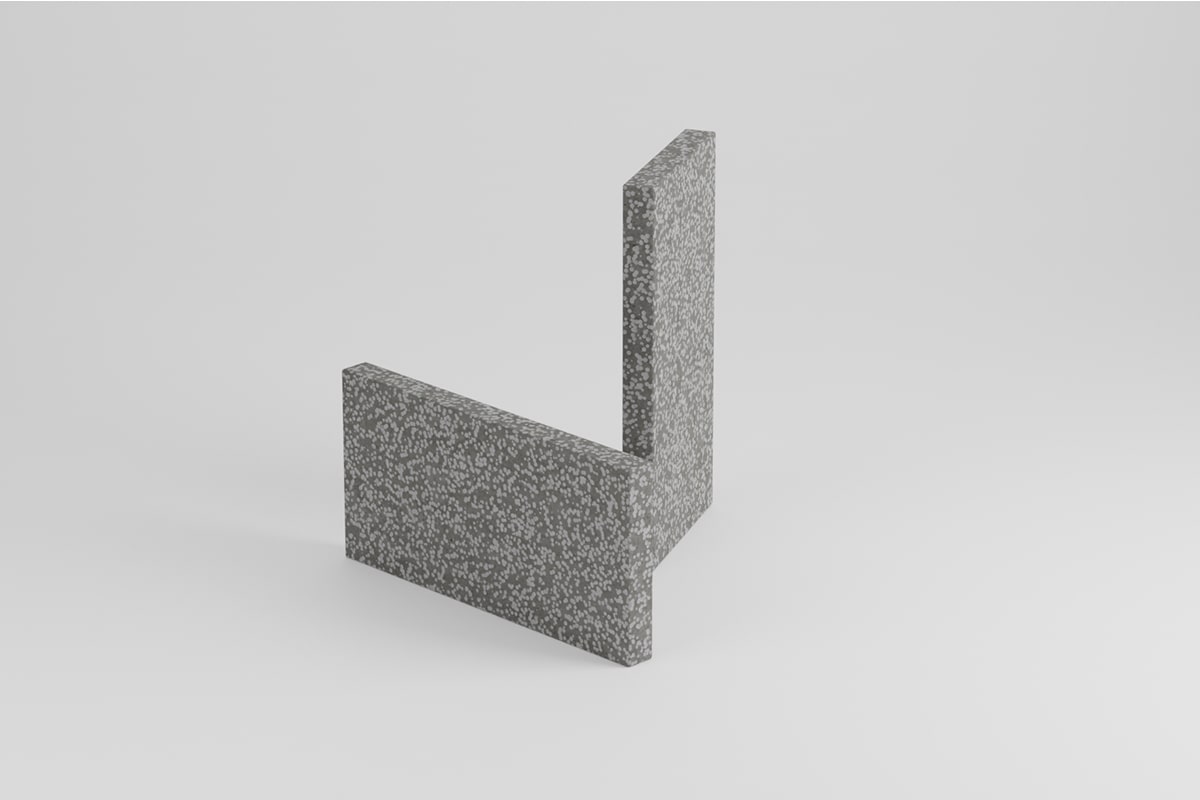
Polystyrene concrete is a modern building material that combines lightness, strength, heat and sound insulation, and environmental friendliness. Let’s look at its characteristics and compare it with other popular materials, and take polystyrene concrete of the D 450 brand as an example.
Moisture absorption.
Polystyrene concrete has a moisture absorption of up to 4%, which is significantly less than aerated concrete (50%) and foam concrete (12%). The low moisture absorption of polystyrene concrete is explained by its composition: foamed polystyrene does not absorb moisture, and wood resin provides waterproofing. This affects all the characteristics of the material, including strength, durability, thermal insulation and microclimate.
Flammability.
Polystyrene concrete belongs to class G1 and is a non-combustible material.
Noise insulation.
Polystyrene concrete has noise insulation properties of 61 dB. Due to the small air pores, the material dampens short sound waves, and large pores filled with polystyrene foam balls dampen long waves. This makes polystyrene concrete more effective in sound insulation compared to competitors.
Antiseptic.
Polystyrene concrete has antiseptic properties due to the use of wood resin (WR). Microorganisms, fungus, mold and rodents do not grow in buildings made of polystyrene concrete.
Thermal insulation.
Polystyrene concrete is a leader among construction materials in terms of thermal insulation. It does not require additional insulation because it is an excellent insulator. For comparison, let’s take a constant energy efficiency value and compare the thickness of the materials that correspond to it:
Polystyrene concrete D 400, 26 cm = pine (with transverse fibers), 30 cm = aerated concrete D 600, 39 cm = expanded clay concrete, 63 cm = clay brick, 1.52 m = concrete on gravel, 3.79 m.
In a dry state, aerated concrete and polystyrene concrete have similar thermal conductivity characteristics. However, at the slightest change in the moisture regime, aerated concrete and foam concrete lose their thermal insulation properties. When aerated concrete gains moisture by 30%, thermal conductivity deteriorates threefold (0.36 W/(m*°C)). The thermal conductivity of polystyrene concrete practically does not change, since it does not absorb moisture.
Frost resistance.
Polystyrene concrete has a frost resistance class of F75-F100. This is the ability of the material to withstand repeated alternate freezing and thawing in a water-saturated state without loss of strength. High water absorption and porous-capillary structure determine the low frost resistance characteristics of foam concrete and aerated concrete. Polystyrene concrete, on the contrary, has high frost resistance, as it does not absorb moisture and is not damaged during freezing/thawing.
Microclimate (vapor permeability).
Aerated concrete has the best vapor permeability. However, high vapor permeability necessitates hydrophobization, which reduces the ability of the material to “breathe”. In this case, foam concrete and polystyrene concrete are preferable.
Ease of use.
Aerated concrete and foam concrete are fragile materials. To install a door, you need to lay a concrete layer, they do not hold fasteners well and can crumble and crack. Due to its tensile strength, polystyrene concrete does not crumble when bent, holds fasteners well and is easy to process.
Conclusion.
Polystyrene concrete is an optimal structural material that simultaneously acts as an excellent insulation. Its energy efficiency, strength, moisture resistance, fire resistance and noise insulation make it ideal for any climate.